Services
Capabilities, from Land Assessment to Long-Term Operations
Analema's capabilities span land assessment, fuel-chain development, supplier coordination, EPC and commissioning, and long-term operations for forestry-first biomass projects in Japan.
Who this works for
Forestry suppliers, including 森林組合: A steady, contracted buyer for low-grade material that otherwise has no market. Long-term offtake gives thinning operations a more predictable revenue stream.
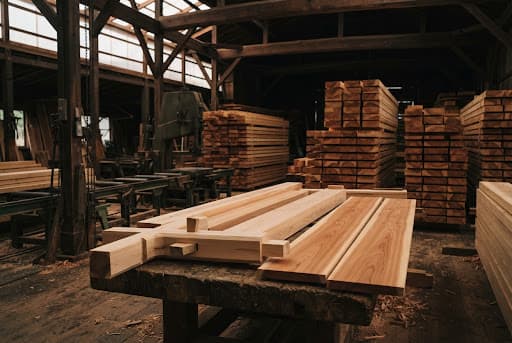
Sawmills: Bark, sawdust, and offcuts become a revenue stream instead of a disposal cost. Nearby process heat can also support drying and other mill operations.
Municipalities: Forest maintenance is funded in part by energy revenue, not public budgets alone. A local plant also supports jobs and regional resilience.
Heat users: Nearby industry and facilities gain access to predictable, locally generated heat. That heat comes from a supply chain already rooted in the area, not a remote grid connection.
Investors & partners: Each project is small-unit and repeatable, with its fuel supply secured before construction. That combination reduces both fuel risk and permitting complexity compared with utility-scale biomass.
Land identification & assessment
Identifying candidate sites and assessing them against forestry catchment, access, and site conditions before a project is defined.
Feedstock & site screening
Evaluating whether a site's likely wood volumes, access, and forestry activity can support a fuel-tolerant CHP unit over the long term.
Fuel-chain development
Building durable local supply relationships with forestry suppliers, thinning operators, and sawmills so the fuel stream is reliable, not opportunistic.
Supplier coordination
Coordinating logistics, delivery schedules, and material specifications across forestry crews, stockyards, and sawmills feeding a project.
Utility & regulatory coordination
Managing grid interconnection, permitting, and the local regulatory steps a forestry-fed biomass project needs to move forward.
EPC & commissioning
Coordinating engineering, procurement, and construction of the CHP unit and site infrastructure, through to startup and commissioning.
Technology integration
Matching containerized gasification CHP systems to a site's actual fuel profile and its heat and power needs, rather than a generic configuration.
Long-term operations support
Ongoing monitoring, maintenance coordination, and performance support after commissioning, sized for a low-staffing, remotely monitored unit.
Project-development support
Structuring the project timeline, stakeholders, and documentation from initial concept through to operating asset.
01 — Site & feasibility
We identify candidate sites and assess land, forestry catchment, and access before committing to a project.
02 — Permits & agreements
We manage grid interconnection, permitting, and the local regulatory steps a project needs to move forward.
03 — Fuel-chain contracts
We build supply agreements with forestry suppliers and sawmills so the project's fuel stream is contracted, not opportunistic.
04 — EPC & commissioning
We coordinate engineering, procurement, and construction of the CHP unit through to startup and commissioning.
05 — Operations & fuel logistics
We support ongoing O&M, fuel logistics, and monitoring once the plant is running.
Contracted heat for industry
The unit behind every figure
One block, on your land
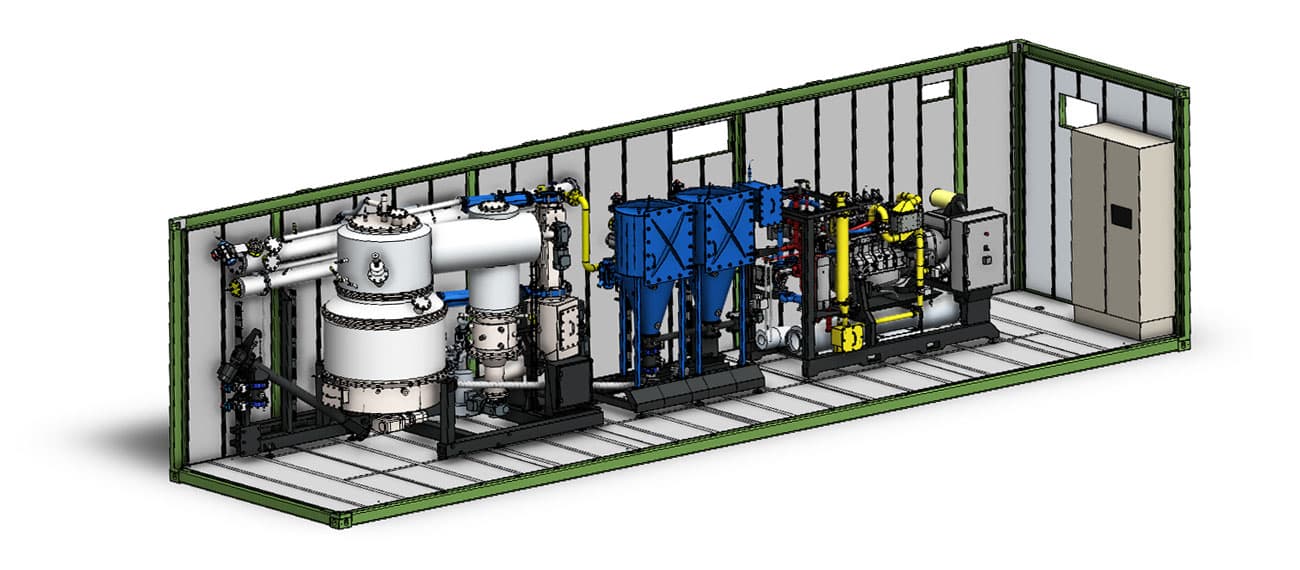
Three LiPRO HKW300 units run in cascade, one CFD dryer, and one moving-floor fuel bay.
Reference configuration — design figures from the manufacturer specification and our published model, not measurements from an operating plant. No project is sited or in progress. This three-unit reference block is a distinct configuration from the ten-unit data-center block.
We deliver woody heat at typically around half the useful cost of Class-A heavy oil, on a zero-capex ESCO basis. The oil side runs about ~¥14 per kWh_th (Class-A heavy oil at an illustrative ¥132.4/L ÷ 9.45 kWh_th/L); your number comes from the assessment. You pay per unit of heat below oil parity; your existing oil boiler stays as backup, so reliability never depends on us alone.
The fit test is simple: about 100 °C hot water and ~452 kWth deliverable (696 kWth installed; ≈452 kWth deliverable after the fuel-drying draw). That suits food processing, brewing, laundry, greenhouse, aquaculture, and onsen loads — the qualifying question is whether your temperature and year-round load match. The minimum viable case starts from about 150 kW of sustained heat — one unit delivers ~151 kWth; below that, a smaller boiler fits better.
The fit varies by load. An onsen or ryokan runs a strong overnight and seasonal demand curve; on-site laundry is a separate, steadier load that our ~90–100 °C water matches directly. We size the block to your real demand profile, not a nominal peak.
Siting is discreet by design: chip deliveries run to a modest cadence of a few a week, and the fuel bay and block sit on host or adjacent land, away from guest-facing areas.
Maintenance is carried out by manufacturer-trained technicians under the service agreement. Because your oil boiler stays in place as backup, you keep two heat sources but pay only for the woody heat you draw — reliability never rests on us alone. The contract states its term, exit terms, and equipment ownership up front; if Analema were unable to continue, the heat-supply contract and the equipment carry assignment provisions.
The order of magnitude is a Scope-1 cut of ~1,040 t-CO2/yr (illustrative), made with real local wood rather than certificates.
Figures are illustrative, on the assumptions above. We hold no named process-heat references yet; the case stands on price and fit, and we compute your number against your own oil bill.